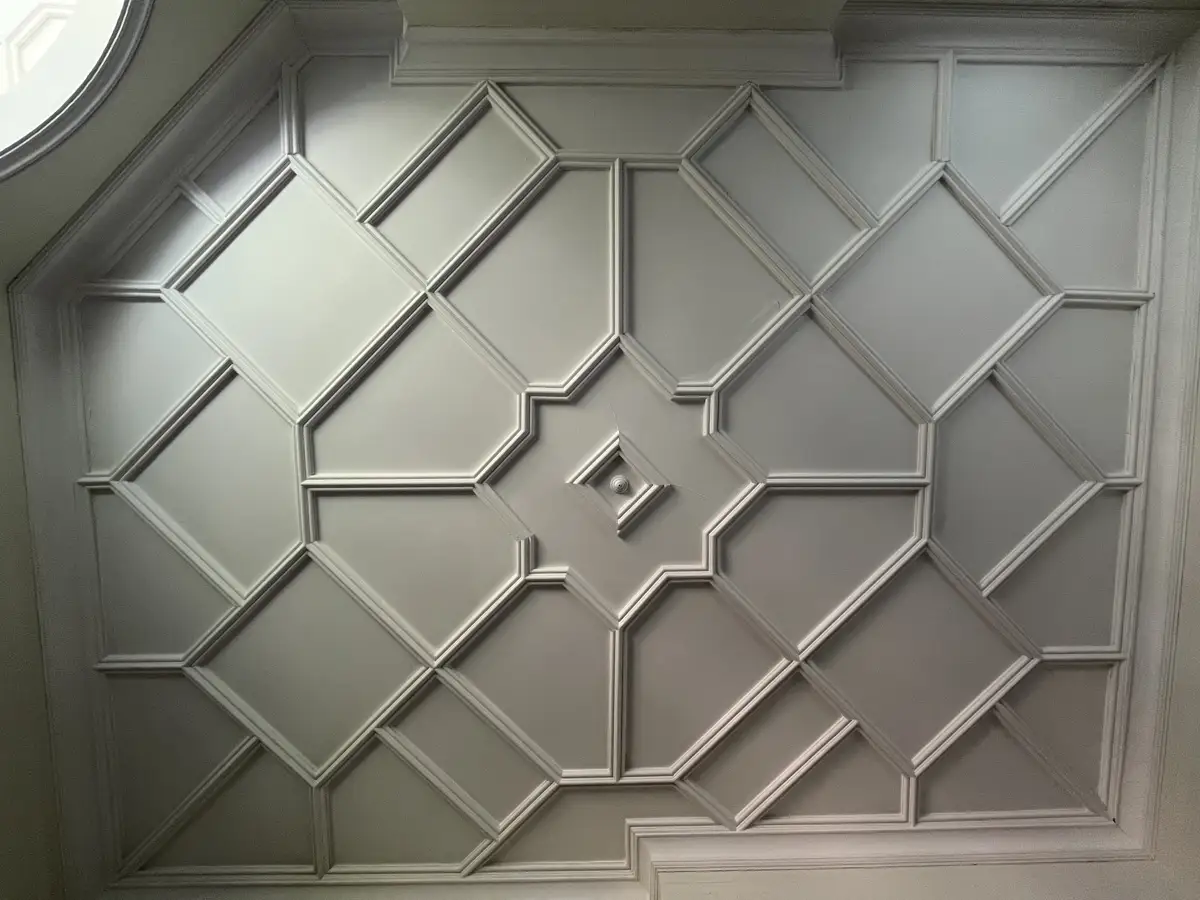
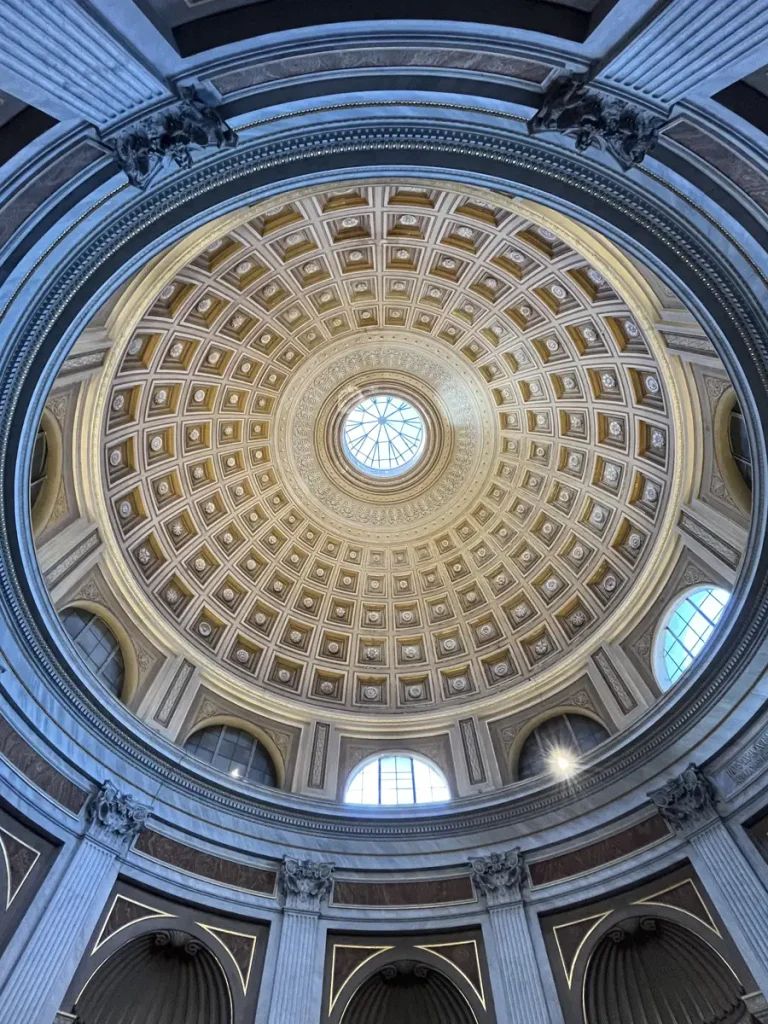
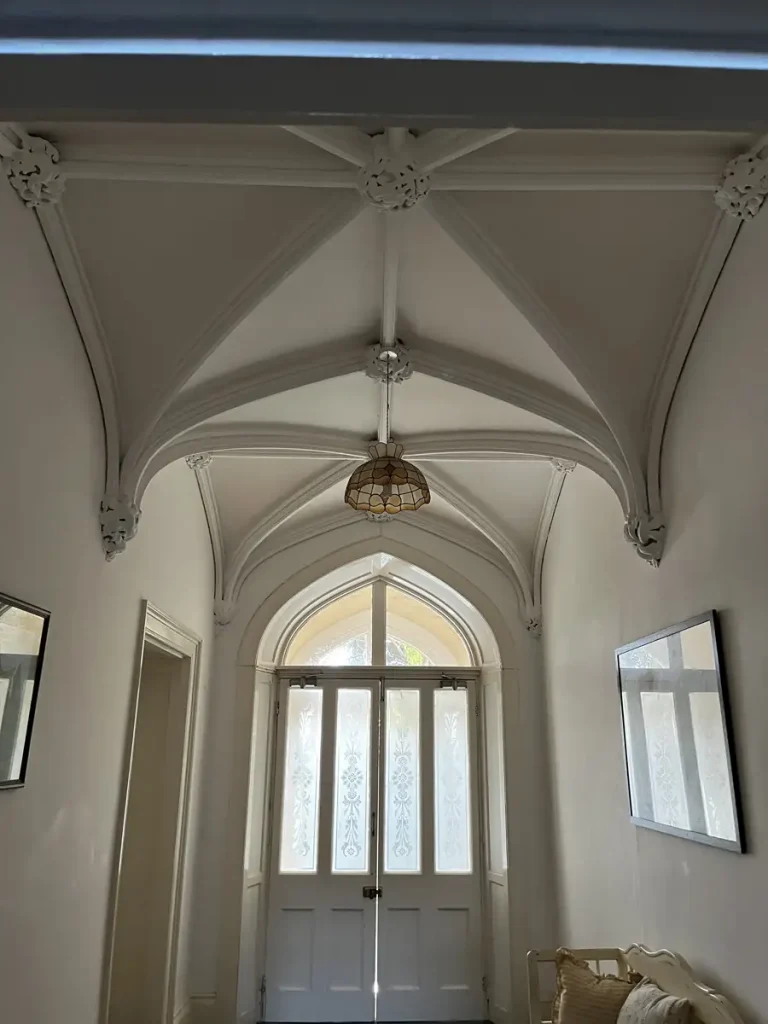
Above every room lies an architectural canvas that defines the character of a space. Ranging from dramatic vaulted rafters to intricate plasterwork, these overhead planes were historically treated as an essential "fifth wall". However, understanding their construction is crucial for long-term building preservation, as materials and methods dictate both aesthetic value and underlying structural stability. Yet modern ceilings are now mostly smooth, plane and minimal.
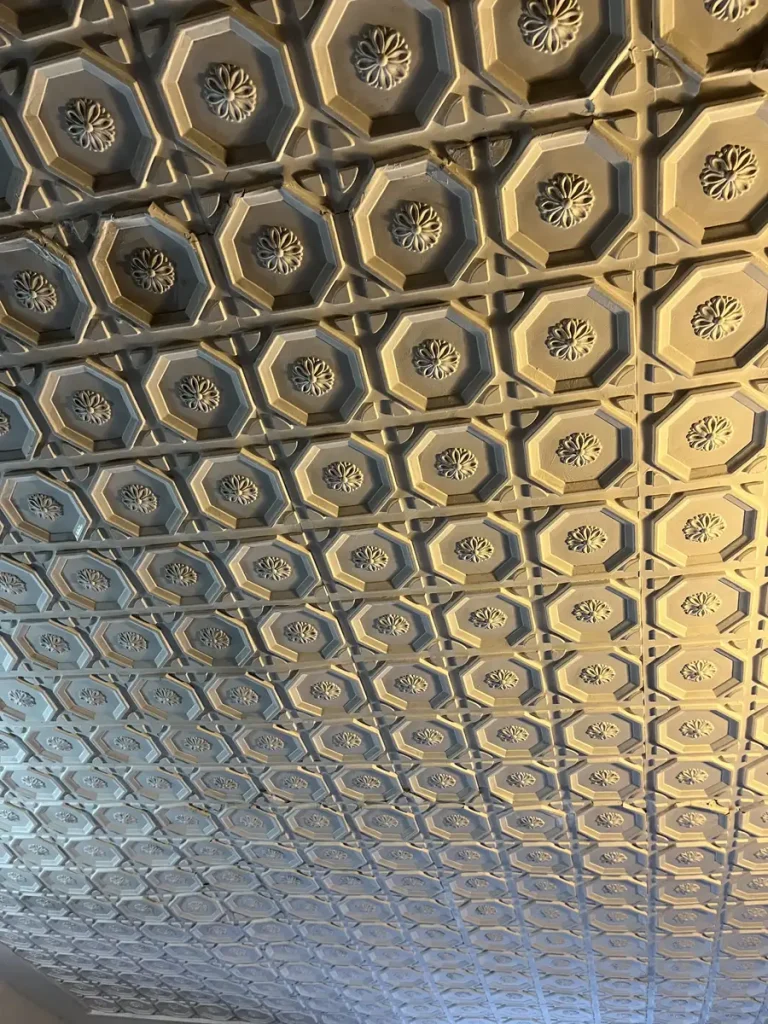
In historic properties, traditional lath-and-plaster ceilings present maintenance challenges. These systems rely on lime plaster bound with horsehair that keys between thin timber battens. Over decades, foot traffic, building settlement, and minor moisture ingress can shear these fragile plaster keys, causing sections of the ceiling to lose adhesion, sag under their own weight, and risk sudden failure without obvious warning.
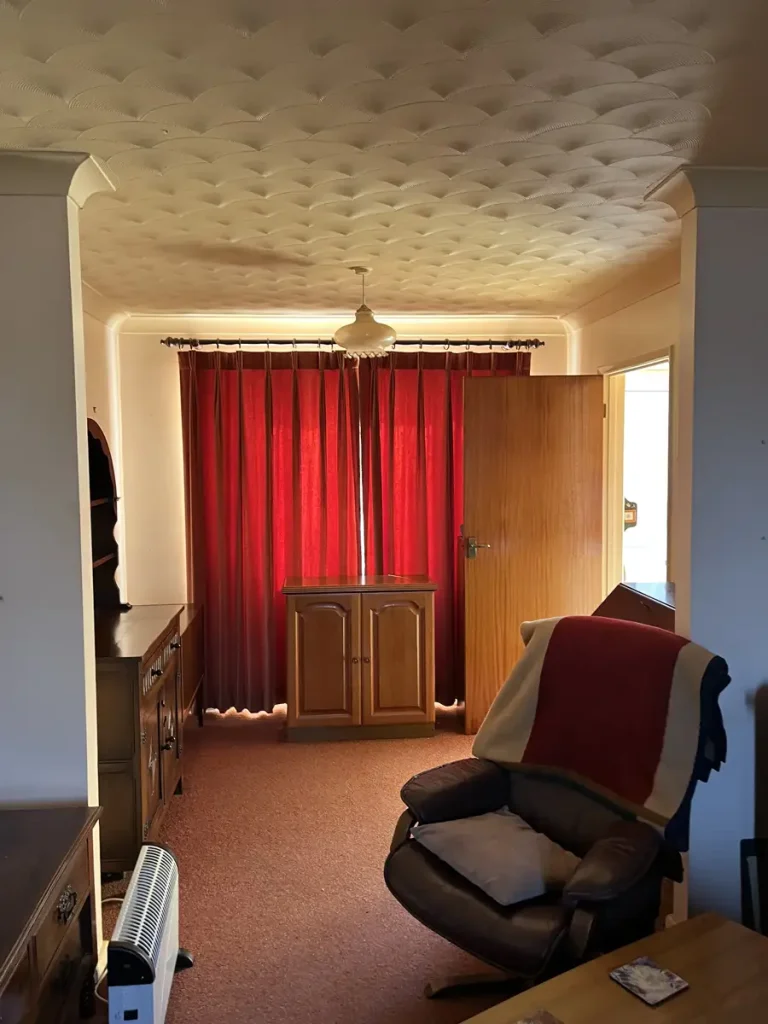
Mid-to-late 20th-century alterations frequently concealed these aging surfaces behind modern materials, introducing severe safety liabilities. Decorative textured finishes such as Artex regularly incorporated chrysotile asbestos for strength, which poses serious health hazards if sanded, drilled, or disturbed during refurbishment. Similarly, lightweight polystyrene ceiling tiles—often glued up as a rapid cosmetic fix—present extreme fire hazards by melting into flaming droplets and generating dense, lethal fumes during house fires.
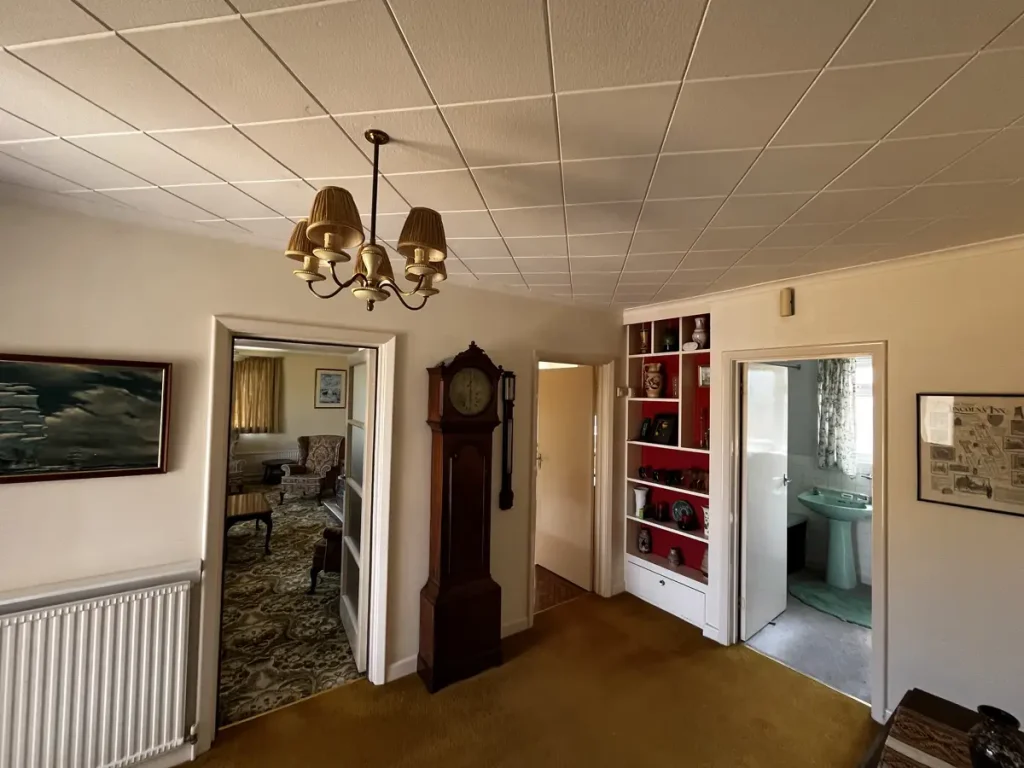
As modern fashion desires uniform simplicity, motifs and shapes are leaving these parts of a home. With continually evolving construction technics and materials, perhaps the spaces above our heads will again be celebrated and decorated in imaginative ways as once before.
0 Comments